


The wording is concrete: one client, one delayed delivery, one named owner, one decision needed before Friday.
By Thursday morning, it appears in a short update. The client name is still there, but the decision request has become “needs further alignment”.
By Friday, it enters the pre-read for the leadership meeting. The client name is gone. The date is gone. The owner has become “the team”. The issue now sits under “delivery dependency”.
On Monday, leadership receives the pack. The issue is visible. It has a line, a status, and a short explanation. The version on the table still looks professional. It also carries less decision value than the first version.
That last passage before a decision is easy to underestimate. It is where information is shortened, renamed, moved under safer headings, and separated from the person who first raised it.
Blame turns this into a personal drama too quickly. The more useful question is traceability: can leadership still see who changed what, why it changed, and whether the original decision request is still attached to the issue?
Before the meeting, leaders can already be assessed by whether they ask what happened to the information on its way to the table.
Who removed the date?
Who changed the owner?
Who replaced the client name with a category?
Who changed the decision request into something to monitor?
Who kept the status colour unchanged while the wording underneath became more careful?
The last mile before a decision is not just preparation. It shapes what leadership believes it is deciding on.
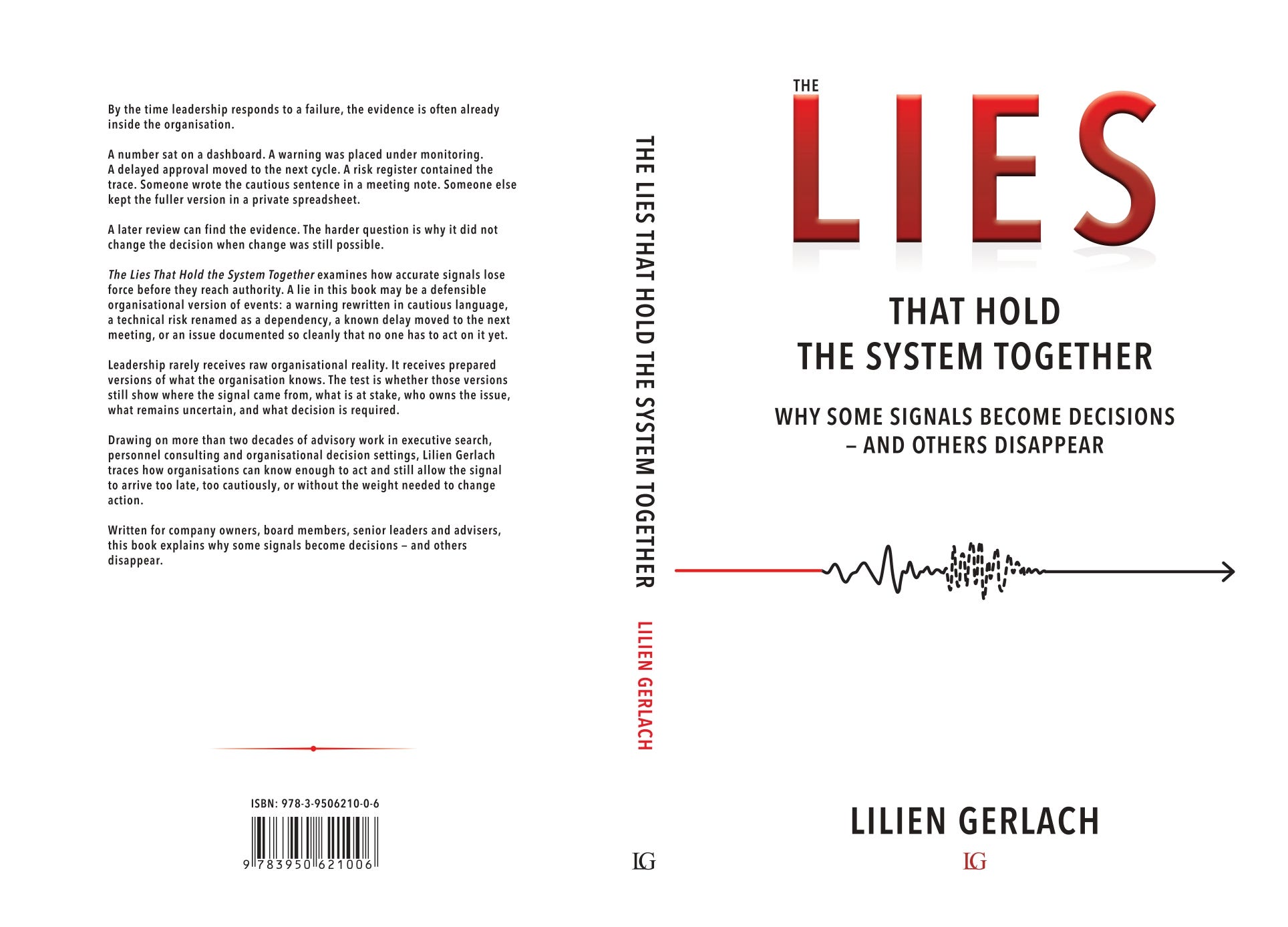
The Lies That Hold the System Together will be published next Monday, 8 June 2026.
.