

In December 2025, a federal jury in Colorado awarded $11.5 million in damages to Rehab Mohamed, a former employee of the Society for Human Resource Management, after finding that she had been subjected to racial discrimination and retaliation. Of that amount, $1.5 million was compensatory damages and $10 million punitive damages. The case is Mohamed v. Society for Human Resource Management, No. 1:22-cv-01625-GPG-KAS, before the United States District Court for the District of Colorado. [1]
The SHRM name may be less immediately familiar in Europe, so it is worth establishing who we are talking about. The Society for Human Resource Management has nearly 340,000 members across 180 countries, certifies HR professionals, provides training and professional guidance, and describes itself as one of the leading professional organisations shaping the world of work. [2] In other words, this was hardly an employer for whom employment discrimination, retaliation or proper HR procedure were some remote legal speciality.
Let us leave the details of the case aside for now; anyone interested can find them in the sources. On the evidence, the jury concluded that Mohamed had been discriminated against on the basis of race and subjected to retaliation because of her complaints about discrimination. [1]
After the verdict, SHRM sought a new trial and also challenged the $10 million punitive damages award. In April 2026, federal judge Gordon P. Gallagher denied the request. “If anyone knew the possibility of high potential punitive damages for employment discrimination and malicious retaliation, it was SHRM…” He went on to point out that SHRM itself trains companies on precisely these issues, including the potential liability attached to them. [3]
SHRM appealed, so the legal story is not yet over. [4] That is the factual thread so far.
An $11.5 million award in favour of an employee, the SHRM name and the concept of discrimination together create a certain density: enough to keep this particular risk circulating in HR coffee-room whispers for quite some time.
Nobody is exactly blindsided by the revelation that discrimination can happen at work. This case, however, ended up making enough noise to travel far beyond SHRM’s executive and legal offices. It may reach virtually the entire industry, but also those standing on the other side: employees. And that population is, for all practical purposes, limitless. As an employee, almost anyone may one day find themselves in a situation where a discrimination complaint, a performance review, a disciplinary process or a dismissal suddenly becomes personal. And so the information may continue to spread like a virus – one that will have an important supporting role later in this story.
When Corporate Risk Becomes Personal
Let us start with the HR professionals who may have to make decisions about complaints, performance problems, disciplinary matters or dismissals. And while we would naturally want a judgment like this to deter discrimination and retaliation, there is another possible side effect worth examining: to what extent does the visibility of cases like this change the behaviour of the HR professional making the next decision?
A performance problem is still a performance problem, a conflict is still a conflict, and a complaint is still a complaint. What changes is the knowledge that a badly handled case can turn into years of litigation, a multimillion-dollar judgment, public testimony, reputational damage and some deeply uncomfortable professional exposure. The fact that all of this happened to SHRM – an organisation that trains others to handle precisely these situations and for which non-discrimination is part of the everyday professional vocabulary – may show just how careless we can be. It is also worth examining why we might think that a) what we are doing is not discrimination at all, b) even if it is, nobody will find out, or c) we can simply get away with it.
Once the perception of personal risk enters the decision, defensive decision-making may follow: instead of choosing the option considered better for the organisation, the personally safer one may come to the fore [5]. Artinger and colleagues asked 950 public-sector managers about the ten most important decisions they had made during the previous twelve months. Eighty per cent reported making at least one such decision, and on average 2.5 of their ten most important decisions fell into this category. The phenomenon appeared at every hierarchical level examined. [5]
And the chances that people will choose the option that feels safer for them personally are not exactly negligible. A 2025 experiment involving 315 managers examined the conditions under which this behaviour becomes more likely. Low psychological safety combined with low levels of authentic leadership increased the likelihood that participants would choose the personally safer option [6].
None of this means that the SHRM judgment will now cause HR professionals to start making defensive decisions. We have no evidence of that. But I think the question now earns itself a place at the table: to what extent does a highly visible case like this become part of the risk environment in which the next HR decision is made?
And if it does, we need to look at how that might become visible in behaviour. Where does justified caution end, and where does self-protection begin?
The Other Extreme
If the decision-maker’s own sense of risk has already become part of the next HR decision, then the ‘other extreme’ is worth looking for in two kinds of behaviour. The first is when more and more protective layers are built around the decision: another level of approval, earlier involvement of lawyers, more documentation, another opinion, a committee or an external adviser. The added value will, presumably, add still more to bureaucracy’s table, already groaning under the weight.
The other direction is avoidance or delay of the decision itself: a performance problem drags on, nobody wants to be the first to take a position in a contentious case, or an option comes to the fore because it will leave the decision-maker less personally exposed later. For an employee who is already not entirely sure-footed, this can become paralysing. Not to mention the wonderfully beneficial – though costly for the employer – effects of the resulting psychological strain.
Legal scrutiny, documentation or a second opinion all have their place when justified. The question to ask is whether the primary function of those additional steps has become reducing the decision-maker’s own exposure while contributing progressively less to the quality of the decision. The same applies in the other direction: postponing a decision may be professionally justified, or it may simply serve to ensure that the risk does not remain with the person who has to decide.
This second pattern has more direct research support. A 2021 study of defensive decision-making linked lower psychological safety and job insecurity to perceived threats to personal resources, alongside an increased likelihood of decision avoidance. The researchers measured decision approach and decision avoidance separately. [7] Delay, of course, proves nothing on its own. A 2020 experiment showed that deferring a decision can be reasonable and adaptive, for example when further information is needed, but it can also take the form of decision avoidance when it is sustained by the difficulty of the choice or by indecision itself. [8]
And we are hardly considering all of this in a profession that is free of pressure to begin with. The 2026 HR Mental Wellbeing Report brought together data from nearly 3,000 British HR professionals over three years. In the latest findings, 40 per cent met the threshold for clinically significant anxiety, 44 per cent for clinically significant symptoms of depression, and 62 per cent were assessed as very likely to be experiencing burnout. Only 13 per cent felt that their own mental wellbeing was adequately supported at work. [9] This is an industry survey, not clinical or causal evidence that HR professionals make worse decisions as a result. It is enough, however, to stop us imagining the decision-maker as an abstract, emotionally sterile actor.
Auditing also gives us a view of what can happen in a professional environment where decisions have to be documented, may later be scrutinised from the outside, and mistakes can carry serious legal consequences. In an experiment involving 118 auditors, participants relied more heavily on the recommendation of a decision aid when litigation risk was higher. When both litigation risk and internal control risk were high, legal defensibility carried more weight, reliance on the decision aid increased, while auditors’ confidence in the quality of their own judgement declined. [10]
In another study, auditors changed their behaviour after one of the banks in their client portfolio failed. They became more conservative with their remaining banking clients. Yet the larger provisions were no more timely, proved less accurate, were subsequently reversed, and also constrained the banks’ ability to lend. [11] In other words, a serious negative event can indeed be followed by greater professional caution without any corresponding improvement in decision quality, while the operational cost lands elsewhere.
None of this means that HR professionals will behave in the same way after the SHRM case. But we now have several pieces of the mechanism. We know that threats to personal resources can be associated with defensive decision-making [7]; that decision deferral can reflect either justified information gathering or avoidance [8]; that a three-year survey covering nearly 3,000 British HR professionals found substantial psychological strain [9]; and that in another highly regulated profession there is evidence that increased legal risk, or an earlier serious adverse event, can actually shift professional judgement [10][11].
From here, additional controls, more documentation or delaying a decision tell us very little on their own. We would need to know what they added to the quality of the decision, what risk they reduced, whose risk they reduced, and what cost they left with the organisation.
Cobweb of Conflict
This is where the point of tension between the different interests becomes tangible. In the same situation, there is the employee’s interest in being treated lawfully and fairly, and the organisation’s interest in resolving the operational problem and ensuring that the work is delivered to the standard both sides contracted for. Then there is the HR professional. Their primary interest is to be capable of doing their job – and to be allowed to do it. That requires professional knowledge, adequate information and genuine room for judgement; at the same time, they need to know exactly who pays the ferryman and which organisational interest they were hired to serve. On the one hand, they should not be forced into moral compromise; on the other, a professionally defensible decision should not expose them personally to disproportionate legal, professional or reputational risk.
In the optimal case, theory and practice fit together like the separate technical plans for the same building. The architectural plan is complete in its own right, with its walls, spaces and roof; the structural, mechanical and electrical plans each describe their own system in the same way. Each stands on its own, yet when overlaid they should all reveal the same building.
In the less optimal case, as the SHRM case also demonstrates, the little drama entitled Omission can strain the regulated framework beyond its limits – with a substantial payout as one possible consequence.
Necessity, Proportionality, Legitimacy
If these three interests really do occupy the same decision space, something has to prevent any one of them from simply overwhelming the other two. Three fairly simple checks suggest themselves: necessity, proportionality and legitimacy.
Necessity begins with being able to state precisely what problem HR is trying to address. A performance discussion, investigation, warning, suspension or dismissal should have an identifiable reason and purpose. If that becomes blurred, the process can begin to take on a life of its own, and the spreadsheet of risks may gradually turn into the work plan: another investigation, another approval, another round of documentation, because the next step looks a little safer that way. At that point, it is worth asking whether the additional layer actually contributes anything to understanding the case or improving the quality of the decision.
Proportionality adds the question of how the scale of the response relates to what we actually know. A complaint may be serious, but on its own it does not make an employee untouchable. A performance problem may be real, but on its own it does not justify any and every employer response. The available evidence, the seriousness of the problem, whether it is repeated, the degree of uncertainty and the likely consequences together provide the framework within which the scale of HR’s response can be assessed.
Legitimacy is a more personal question. What entitles this particular HR professional to exercise professional judgement in this case? Do they have the information, professional knowledge and decision-making latitude required? Do they know where their own authority ends and where another form of expertise needs to be brought in? I explored these questions in more detail in Who judges the judges? they carry directly into the present case, where the decision-maker is also conscious of their own exposure.
Reviewability is part of this as well. A later, competent reviewer should be able to reconstruct what information was available, what alternatives were considered and on what basis the final decision was made. Documentation is only one means of doing that. The point is that the path of professional judgement should remain traceable afterwards. If AI has also played a role in the decision, this requirement is becoming less and less a matter of professional preference alone. For certain high-risk systems, the EU AI Act requires traceability, logging, human oversight and the possibility of providing the person affected with a clear and meaningful explanation [12]. The timing matters here: the Chapter III obligations applying to Annex III high-risk systems used in employment apply from 2 December 2027. Article 86 itself was not among the provisions postponed by Regulation (EU) 2026/1744 and remains subject to the AI Act’s general application timetable [12].
The Court of Justice of the European Union further clarified the GDPR rules on automated decision-making in 2025: the person affected must be given an intelligible explanation of the procedure and principles by which the automated result concerning them was produced. The entire algorithm does not have to be laid bare on the table, but neither can the ‘black box’ simply be closed with the explanation that this is what the system produced [13]. That may rather urgently give the relevant parties a reason to make the decision path reconstructable long before someone has to open the box afterwards.
These three considerations can also help show when HR’s own self-protection begins to occupy too much space in the decision. If a step is unnecessary, disproportionate, or placed in the hands of someone who lacks the information, competence or authority required, the question is no longer simply whether the process is procedurally sound. We also need to ask whose risk it is reducing – and at what cost.
Sidenote: Who Actually Thinks of Themselves as Someone Who Discriminates?
The picture we have of our own impartiality is not a particularly reliable way of checking ourselves. The phenomenon known as the bias blind spot describes our tendency to recognise cognitive biases more readily in other people than in ourselves [14]. One possible explanation is that we judge ourselves partly by our intentions, while judging others by what we can observe in their behaviour [15].
HR is no exception. In a study of 234 Swiss HR professionals, participants were asked about seven biases that can arise in employee selection. They consistently judged the average HR colleague to be more susceptible to those biases than they were themselves [16]. That does not mean they discriminated. It does show that even people who routinely have to account for such influences in their professional work are not necessarily accurate judges of their own susceptibility to bias.
The self-image of being ‘someone who does not discriminate’ is therefore not enough, on its own, to establish whether a particular decision was genuinely free from bias. It is worth being especially cautious about that self-assessment when we know our own intentions, while others will judge the consequences of our decisions from the behaviour they can actually observe.
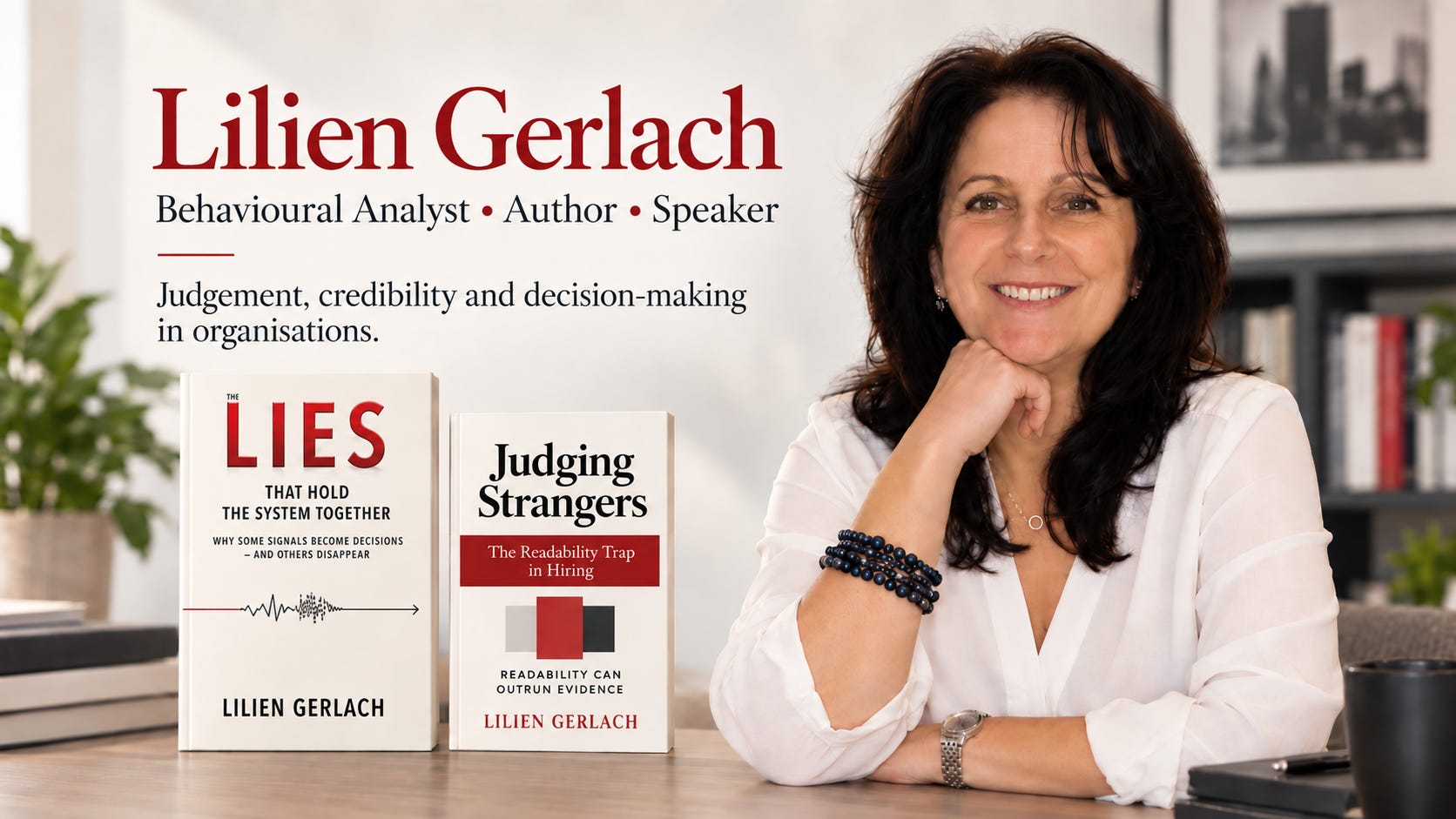
The range of ways in which recruitment and human judgement can go astray is impressively broad, and unpacking them here would stretch this article well beyond its limits. If you are involved on any side – as a candidate, a manager or an HR professional – I go much further into this question in my book, Judging Strangers: The Readability Trap in Hiring.
Sources
[1] Mohamed v. Society for Human Resource Management, No. 1:22-cv-01625-GPG-KAS, U.S. District Court for the District of Colorado; jury verdict, 5 December 2025.
[2] Society for Human Resource Management. About SHRM; SHRM HR Certification; Educational Programs. SHRM.org.
[3] Mohamed v. Society for Human Resource Management, No. 1:22-cv-01625-GPG-KAS, post-trial order, U.S. District Court for the District of Colorado, 15 April 2026.
[4] Simpson, A. G. (2026). Insurer Says Virginia ‘Intentional’ Acts Law Blocks $10M Punitive Damages Claim. Insurance Journal, 31 July 2026.
[5] Artinger, F. M., Artinger, S., & Gigerenzer, G. (2019). C. Y. A.: Frequency and causes of defensive decisions in public administration. Business Research, 12, 9–25. https://doi.org/10.1007/s40685-018-0074-2
[6] Artinger, F. M., Marx-Fleck, S., Junker, N. M., Gigerenzer, G., Artinger, S., & van Dick, R. (2025). Coping with uncertainty: The interaction of psychological safety and authentic leadership in their effects on defensive decision making. Journal of Business Research, 190, 115240. https://doi.org/10.1016/j.jbusres.2025.115240
[7] Marx-Fleck, S., Junker, N. M., Artinger, F., & van Dick, R. (2021). Defensive decision making: Operationalization and the relevance of psychological safety and job insecurity from a conservation of resources perspective. Journal of Occupational and Organizational Psychology, 94(3), 616–644. https://doi.org/10.1111/joop.12353
[8] Berens, S., & Funke, J. (2020). A vignette study of option refusal and decision deferral as two forms of decision avoidance: Situational and personal predictors. PLOS ONE, 15(10), e0241182. https://doi.org/10.1371/journal.pone.0241182
[9] Baker, F., & Burrell, J. (2026). HR Mental Wellbeing Report 2026: A three-year analysis of HR mental wellbeing. Ultimate Resilience. Published in partnership with Everywhen.
[10] Gomaa, M. I., Hunton, J. E., & Rose, J. M. (2008). The effects of control risk and litigation risk on decision aid reliance. International Journal of Applied Decision Sciences, 1(1), 80–106. https://doi.org/10.1504/IJADS.2008.017953
[11] Hall, C., Judd, J. S., & Sunder, J. (2023). Auditor conservatism, audit quality, and real consequences for clients. Review of Accounting Studies, 28(2), 689–725. https://doi.org/10.1007/s11142-021-09653-1
[12] Regulation (EU) 2024/1689 (Artificial Intelligence Act), in particular Articles 12, 14, 26, 86 and 113, and Annex III; as amended by Regulation (EU) 2026/1744.
[13] Court of Justice of the European Union, CK v Magistrat der Stadt Wien (Dun & Bradstreet Austria), Case C-203/22, judgment of 27 February 2025, ECLI:EU:C:2025:117; in particular the interpretation of Article 15(1)(h) GDPR.
[14] Pronin, E., Lin, D. Y., & Ross, L. (2002). The bias blind spot: Perceptions of bias in self versus others. Personality and Social Psychology Bulletin, 28(3), 369–381. https://doi.org/10.1177/0146167202286008
[15] Pronin, E., & Kugler, M. B. (2007). Valuing thoughts, ignoring behavior: The introspection illusion as a source of the bias blind spot. Journal of Experimental Social Psychology, 43(4), 565–578. https://doi.org/10.1016/j.jesp.2006.05.011
[16] Thomas, O., & Reimann, O. (2023). The bias blind spot among HR employees in hiring decisions. German Journal of Human Resource Management, 37(1), 5–22. https://doi.org/10.1177/23970022221094523
Lilien Gerlach
Behavioural Analyst & Author
liliengerlach.com
